Showing posts with label Chununpa. Show all posts

Friday, June 2, 2023

Inipi


Every morning Wi wakes and rises high in the Eastern Sky and wakes Tunkasila (Grandfather) Yappa, and the Eastern wind begins to blow.  Tunkasila Yappa walks West and South to bring the message of Wi to Tunkasila Okaga and the Southern winds wake, bringing life to people.  Tukasila Okaga walks North and West and finds Tukasila Io the terrifying Unknown and the West winds howl. Tunkasila Io walks North and East to find Tunkasila Waziyatta quietly resting on his blanket of snow.  Tunkasila Waziyatta looks up and gazes South to the Center of all things and the North Winds Blow.  In the Center of all things, the Center of Creation rising from the Rainbow Tipi is the youngest Tunkasila Yummani (Umi) the Twister. Chaos forms and in it's center stands the creation of all the divine Tunkasila (Grandfathers) Human Kind. HO.  All these together are the reflections of the Great Spirit Grandfather, Wakan Tanka Tunkasila. 

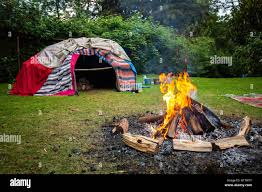
The Inipi or Sweat Lodge is the first of the 7 sacred rites of the people.  The Inipi represents the Womb of the Great Mother Earth giving birth to all living things.  Ina Mahka, (Mother Earth) is the great wheel of creation that gives rise to the Great Grandfathers of all direction, the Four Winds (Topa Tate).  The Inipi is the place where our prayers are heard, our cries are listened to, and we are nurtured by our Mother the Earth.  

We enter and exit from the East, Yappa. The path from the sacred Fire pit (Iktu), that sits just to the right at the end of the path for the opening to the lodge.  This is the bringer and sender of prayers from the Mother to the Great Spirit, Wakan Tanka Tunkasila.  

Many years ago I and some like minded individuals had a working Inipi on a friends property.  I would conduct a minor ceremony for the folks who were willing to sacrifice their comfort for the rite.  It was a good way to commune with nature and other human beings in a way that is sacred and creates the kinds of memories one never forgets.  It's good for the soul. 

The Inipi is the Sacred Rite that with the Chununpa, (Sacred Pipe) precedes all other Rites and Ceremonies.   It is the Mother that cleanses and nurtures the soul, our true selves.  

Peace and Balance,

John

Friday, November 18, 2022

The Book of The Hopi


In 1963, Frank Waters wrote a book of prophesy and history called, "The Book Of The Hopi."  The book eludes to the rise and fall of past times when men had control of technologies that we haven't grasped yet today.  It leads the reader down a complex abstract narrative that the uninitiated could perceive as being mythological in nature, but then reveals that the information within the book was held as a sacred secret by the Hopi Elders until the proper time comes about to reveal the message to the world.  Apparently the early sixties was the right time.

Tokpela: The First World.  Speaks of He the Infinite creating Sotukang, the nine universal kingdoms.  The Infinite, Taiowa the Creator, and the seven realms for life to come. Now here's where is get's a little funky. It talks of seven vibratory axis around the Earth's center pole to pole all resounding, or sounding at once.  The major Ley lines of the Earth all vibrating at the same time.  

This is when Spider Woman gathered the four colors from the earth and began creating humankind.  She made them in the image of Sotukang, and created four female partners for four male beings.  Who understood the Earth as a living entity just like themselves.  

The Nature of Man:  Of the first Man it was spoken, "Although he had human parents, his first parents are the universal Entities that created him through them from his mother the Earth, and his father the Sun." A solar god that gives all life to the universe.  Ok, we're not talking about  the sun in the sky, but the center of our universe, the center of the Galaxy.  So our mother the Earth is not the consort of our sun, but the consort of the Greater Sun in the Center of all Things. hmmm. Then there was one created apart from the rest, a Man of Knowledge who would be the first Medicine man. 

Tuwaqachi: The Fourth World.  We've skipped ahead a couple worlds, but from out of the third world came a man who made claims to the fourth world, "I am the caretaker, the guardian and protector of this land." The people recognized him as Masaw the appointed caretaker of the third world who was cast out due to his lack of humility and his apparent self importance.  Sound like a familiar story?  

The Legends:  The first of these legends is the Path of the Heart, also called the Road of Life, or the Red Road.  This is the road we follow seeking good in life, and work on becoming a better being.  To know thyself. 

Second Legend: The planting of the magic jar which brings waters to the desert.  This is the story about the Water Witches, or Dowsers of common legend.  The people who find the water and other things needed by the people. 

Third Legend: Transference of Power.  "Old Wu'ya was a man of pure heart.  His time was spent in healing the people, taking care of the children, and teaching warriors how to be men. Upon his death in the place he was buried, a great spruce grew from which the people used his wood in their ceremonies and to make the sacred pipe."

Fourth Legend:  The birth of the Katchina, from which the people learned to read the Omens, and signs of things to come from the spirits of the Earth by offering tokens and gifts to show respect to the Earth our Mother and our Elders who have come before us.  

Fifth Legend: Talking Deer the Sacred Clown was given to the people to teach us of our own folly and to learn the lessons of the self so that we may grow beyond ourselves. 

The Mystery Plays On:  These are the actions of the Sorcerers, the Seers, the Men of Knowledge.  This is the time of great shock, from the beginning to beyond. The first world to the fourth world and beyond. The Sorcerers are those who play out what will come and what has been.  "As it was in the beginning so it shall be at the end."  HO.

Peace and Balance,

John

Tuesday, November 15, 2022

White Buffalo Calf Woman (Pte san Wi)


I did not write this.  It comes from a website dedicated to Lakota/Dakota history and myth.  

 In the days before the Lakota had horses on which to hunt the buffalo, food was often scarce. One summer when the seven sacred council fires of the Lakota Oyate (Nation) had camped together, there was very little to eat. Two young men of the Itazipcho band – the ‘Without-Bows’ – decided they would rise early and look for game. They left camp with dogs still yawning, setting out across the plain, accompanied by the song of the yellow meadowlark.

After a while the day began to grow warm. Crickets chirruped in the waving grass, prairie dogs darted their holes as the hunters approached, but still spotted no real game. So the young men made towards a little hill to see further across the vast expanse of level prairie. Reaching it, they shielded their eyes and scanned the distance, but beheld coming out of the growing heat haze something bright, walking on two legs, not four. Soon they recognized her as a beautiful woman in shining white buckskin.

Coming closer, they noticed her buckskin wonderfully decorated with sacred designs in rainbow-colored porcupine quills. She carried a bundle on her back, and a fan of fragrant sage leaves in her hand. Her jet-black hair was loose, except for a single strand tied with buffalo fur. Eyes full of light and power, she transfixed the young men.

Now one of the men filled with burning desire. “What a woman!” he said sideways to his friend. “And all alone on the prairie. I’m going to make the most of this!”

“You fool,” said the other. “This woman is holy.”

But the foolish one made up his mind, and when the woman beckoned, he needed no second invitation. Reaching out for her, a great cloud enveloped them both. When it lifted, the woman stood, and at her feet remained nothing but a pile of bones with terrible snakes writhing among them.

“Behold,” said the woman to the good hunter in Lakota, so he thought her one of his tribe and approached. When he saw his dead friend’s remains, he menaced her with his bow but she proclaimed, “I am Wakan (holy) and your weapons cannot hurt me.  Do as I say and you will not regret it.” He relented and she continued, “I come to your people with a message from Tatanka Oyate, the Buffalo Nation. Return to Chief Hehlokecha Najin (Standing Hollow Horn) and tell him what you have seen. Tell him to prepare a tipi large enough for all his people, and to get ready for my coming.”

The young man ran back across the prairie, gasping for breath as he reached camp. With a small crowd of people already following, he found Standing Hollow Horn and related the story that the sacred woman was coming. The chief ordered several tipis to be combined into one big enough for his band. The people waited with anticipation for the wakan woman to arrive.

After four days the scouts posted to watch for the holy woman saw something coming towards them in a beautiful manner from across the prairie. Then suddenly the woman appeared in the great lodge, walking round it in a sunwise direction. The chief addressed her respectfully, saying: “Sister, we are glad you have come to instruct us.”

She told him what she wanted done. In the center of the tipi they were to put up an owanka wakan, a sacred altar, made of red earth, with a buffalo skull and a three-stick rack for a holy bundle she brought. They did as directed, and she traced a design with her finger on the smoothed earth of the altar. She showed them how to do all this, then circled the lodge again sunwise. She stopped before Standing Hollow Horn as he sat in the west of the lodge, and held her bundle before him in both hands.

Again the chief spoke, saying: “Sister, we are glad. We have had no meat for some time. All we can give you is water.” They dipped some wacanga, sweet grass, into a skin bag of water and gave it to her, and to this day the people dip sweet grass or an eagle wing in water and sprinkle it on a person to be purified.

“Look on this,” she said about her bundle, “and always love and respect it. It is very sacred. No one who is impure should ever touch this, for it contains the chanunpa, the sacred pipe.” She unrolled the skin bundle and took out a pipe, and a small round stone which she put down on the ground. She presented it to the people and let them look. She grasped the stem with right hand and the bowl with her left, and thus the pipe has been held ever since.

She filled it with chan-shasha, red willow-bark tobacco. She walked around the lodge four times after the manner of Anpetu-Wi, the great sun. This represented the circle without end, the sacred hoop, the road of life. The woman placed a dry buffalo chip on the fire and lit the pipe with it. This was peta-owihankeshni, the fire without end, the flame to be passed on from generation to generation.

She told them that the smoke rising from the bowl was Tunkashila’s breath, the living breath of the great Grandfather Mystery. “With this you will, during winters to come, send your voices to Wakan Tanka, your Father and Grandfather.”

She showed the people the right way to pray, words and gestures. She taught them how to sing the pipe-filling song and how to lift the pipe to the sky, toward Grandfather, and down toward Grandmother Earth, to Unci, and then to the four directions of the universe. “With this pipe you will walk on the Earth, which is your Grandmother and Mother. The Earth is sacred, and so is every step that you take on her. The bowl of the pipe is of red stone; it is the earth. With your feet resting upon the earth and pipe stem reaching into the sky, your body forms a living bridge between the Sacred Beneath and the Sacred Above. Wakan Tanka smiles upon us, because now we are as one: earth, sky, all living things, the two-legged, the four-legged, the winged ones, the trees, the grasses.

“Together with the people, they are all related, one family. The pipe holds them all together.

Carved into the pipe and facing the center is the buffalo calf, who stands for all the four-leggeds who live upon your Mother. The buffalo represents the universe and the four directions, because he stands on four legs, for the four ages of creation. The buffalo was put in the west by Wakan Tanka at the making of the world, to hold back the waters.

“Every year he loses one hair, and in every one of the four ages he loses a leg. The sacred hoop will end when all the hair and legs of the great buffalo are gone, and the water comes back to cover Mother Earth.

The stem is of wood, which stands for all that grows on the Earth. These twelve hanging feathers from Wanblee Galeshka (Spotted Eagle) stand for all the winged creatures. All these living things of the universe are the children of Mother Earth. You are all joined as one family, and you will be reminded of this when you smoke the pipe. Treat this pipe and the earth with respect, and your people will increase and prosper.”

The woman told them that seven circles carved on the stone represented the seven rites in which the people would learn to use the sacred pipe. The first was for the rite of “keeping the soul”, which she now taught them. “It should be for you a sacred day when one of your people dies. You must then keep his soul as I shall teach you, and through this you will gain much power; for if the soul is kept, it will increase in you your concern and love for your neighbor. So long as the person, in his soul, is kept with the people, through him you will be able to send your voice to Wakan Tanka.”

The remaining rites they would learn in due course.

The woman made as if to leave the lodge, but then turned, speaking to Standing Hollow Horn again. “This pipe will carry you to the end. Remember that in me there are four ages. I am going now, but I will look on your people in every age, and at the end I will return.”

She now circumambulated slowly around the lodge in a sunwise direction. The people were silent and awed. Even the hungry young children watched, their eyes alive with wonder. Then she left.

After she had walked a short distance, she faced the people again and sat down on the prairie. The people gazing after her with amazement witnessed her transforming into a young red and brown buffalo calf…then rolled over and became a yellow buffalo calf….then rolled again into a black one. She continued further into the prairie, and then lay down and rolled over one more time, looking back at the people.

Standing, she appeared as a white buffalo. She walked on until only visible as a bright speck in the distant prairie. She kept moving, stopping to bow to the four directions of the earth, and finally disappeared over the hill.

As soon as she had vanished, buffalo in great herds appeared, allowing themselves to be killed so that the people might survive. And from that day on, our relations, the buffalo, furnished the people with everything they need — meat for their food, skins for their clothes and tipis, and bones for their many tools. Until, of course, the herds no longer sustained the people…but that is another story.

Mitakuye Oyasin, We are all related.

Peace and Balance,

John

Sunday, November 6, 2022

Wi and Han Wi


 A long time ago the warrior Anpao was in love with the maiden Wi.  He tried many things to gain her attention and favor.  Anpao would hunt and bring her the finest deer hides.  He would create the most elaborate tipi's with the best buffalo hides.  He would bring her the finest horses.  Anpao did everything he could think of to get her attention.  

Wi had eyes for another.  She was always looking out for Anpetu, the sun warrior.  She would watch for his arrival and on his approach would run and hide.  Wi was afraid of Anpetu's brightness. His glare blinded her.  

Anpao was jealous and created a terrible idea.  He traveled to Anpetu's tipi to do battle with what he thought were the Gnasty's that lived there.  Anpao found himself in a perpetual battle with the monsters from the sun.  

Each morning Anpetu would make his approach, and Wi would run and hide.  And every night Anpetu would sleep and Wi would gaze upon him as he slept.  But, when the warrior Anpao made is presence known thru Anpetu, Wi found herself gazing out at a reflection waiting for Anpetu.  What came instead was the conflict Between Anpetu and Anpao.  The monsters of the sun were dancing.  Because of this conflict once every month Wi can gaze upon Anpetu and Anpetu can share space with Wi.  Anpao sleeps. 

During this time Wi and Han Wi share the skies.  The sun and the moon can be seen dancing together while the Darkness and the Light battle for conquest of the monsters of the sun.  Who never appear.  

Peace and Balance,

John

Saturday, November 5, 2022

Pipe Carrier


 According to Lakota History, the Sacred Pipe was brought to Earth about 19 generations ago by Pte San Wi, The White Buffalo Calf Woman at a time when the seven tribes were gathered in council.  The people were starving, the hunting was bad, no Buffalo were to be found.  Pte San Wi came to the people and instructed them on the importance of living in balance with nature.  She taught them about the sacred directions and the Grandfathers of the Four Winds. Then she taught them everything they needed to know about the making, handling, and caring for the sacred pipe.   Then she taught the people how to pray.  She taught them the sing and how to use the pipe as a tool to communicate with Great Spirit Grandfather, Wakan Tanka Tunkasila.  In this way the people could ask for Tatanka to return and sacrifice himself for the people so that they could eat and survive.  The Buffalo was listening, and Great Spirit Grandfather sent him to the people.  The people began to prosper, ate well, and live in balance. It was a good thing.

There are two types of pipes, the personal pipe that can be owned and used by anyone for personal prayer and ceremony.  This pipe should not be shared.  It is intended to be used by and for the person who owns it.  The other is carried by the Pipe Carrier to be used for the people.  This pipe is used by the Pipe Carrier either alone, or with others in ceremony.  It is shared by a group for the whole that the prayer will arrive on mass to Great Spirit Grandfather for the betterment of all either for Teaching or Healing, or Both.  

A Pipe Carrier carries this task from lifetime to lifetime.  He is born to the task, he does not earn it.  This is something that was given to him before he arrived on this Earth.  Today due to the mix in cultures and the rise in spiritual awareness, the pipe has taken on the weight of cultures from all over the globe.  This is a good thing, and a bad thing.  Those who jump into an indigenous Pip Ceremony blindly without the knowledge and background to ground them to the Earth are running great spiritual, emotional, and mental risks.  The misuse of such things can lead to madness and death.  However those who have a calling and come to these things with respect and humility may add to the power of humanity and spread the healing and love to all the people. 

The Pipe reflects both the masculine and feminine side of nature.  The bowl with it's hole to accept the stem represents the feminine, the stem that in inserted into the bowl is the male.  Alone they will not function, but together they are a whole conduit to Great Spirit Grandfather. Only together will the prayer pass from the pipe to the Four Winds, to Great Grandfather.  The stem is the organic nature of existence, and the bowl is the inorganic aspect of the Earth, the fire is the ever present spirit.  Yin Yang. 

There are many correct ways to conduct a Pipe Ceremony.  The reader may find one that fits them the best, however there are a few practices that should be followed before beginning and when finishing the ceremony.  First it is important to smudge or sage yourself and any one else using the pipe.  This spiritually cleanses the participant and protects from spiritual problems.  Second is to maintain the utmost respect and humility while participating in ceremony.  Keeping your practice at the highest levels of respect and humility keeps you, me, and all that much closer to the Creator.  

Pipe Carriers are Healers, Warriors, Teachers, and Sacred Clowns.  We are the rugs that others come to and clean their feet on.  We are the bowls of water that are passed around to quench the thirst of the many.  We are the words that the Four Winds whisper into the hearts of the people.  We are Happy and Stand in High Honor to be of service, Mitakuye Oyatsin Hetchetu yelo, HO.  For all of my relations it is so.  

Peace and Balance,

John


Friday, November 4, 2022

Toltec


Originally the Toltec were a pre Columbian/ Mesoamerican culture that ruled an area centered in Tula, Hidalgo, and Mexico during pre classic and post classic  period of Central American Culture from about 950 to 1150 BCE.  The Toltec spoke an ancient form of the Nahuatl language that was in a period of changing at the time.  Influences of other peoples moving into the regions were changing and altering the language of the Toltec.  At the same time the Toltec were influencing and changing the cultures of the immigrants to their lands. 

The Toltec greatly influenced the cultures of both the Aztec and Mayan societies.  The Toltec militarily absorbed the Maya and in doing so created the great city of Chichen Itza, with architectural design that even today modern man has difficulties fathoming.  The Maya looked upon the Toltec with great reverence and respect.  In the language that developed from a Blend of Maya and Hahuatl the word Toltec became the word Mayan culture used for Sorcerer.  As time progressed the Great Aztec Empire evolved from the Toltec, Mayan, and Aztec cultures that all seemed to blend together and became known by the name of the majority, the Aztecas.   In the Aztec language that evolved from a blending of the other two plus the Aztecan speech, the word Toltec became the word Aztec would use for Artisan, or Creator.  

As time progressed and the Central American Culture became predominantly known as the Aztec Empire, the Toltec became part of the mythology of Central America.  The Toltec had become the Sorcerers, the Seers, those that spoke to the gods, the Wazi, Great Wizards.  Aztec priests became known as Toltec.  

This absorption into Culture by the Toltec could be due to their abilities to predict or foresee what was becoming of their own peoples.  Their populations was diminishing and in order to maintain ancient technologies and secret knowing's a decision was made, "If you can't beat them, join them." So they shared their knowledge with each following culture that would absorb or be absorbed by them.  This is the question, who did the absorbing?  

In the modern world there are many societies that lay claim to the title, "Toltec."  Brought into popularity in the late 60's and early 70's by the author, Carlos Castaneda, Toltec became a term for, "A man of Knowledge."  Almost a direct reflection of the blended Mayan and Aztecan languages.  

What then is, "A Man of Knowledge?"  We could be literal with with the words and take it as read, a person that knows stuff.  But, that sort of goes, Nowhere quick.  "A Man of Knowledge," then becomes someone who walks outside the standard path of normal society.  He/she is a person who gains their living information through the observation of things most can not see.  Reflecting on the relationship to that knowledge with the majority vs. the minority.  After much watching, listening, and reflecting the knowledge comes to the observer who can then decide to share or not the knowledge observed or experienced.  In that way the Toltec are indeed the Sorcerers, the seers of modern society.

To become, "A Man of Knowledge" is to take a step away from the fears that bind us to the normal and the restrains of the majority.  We separate ourselves from the easily traveled path to the difficult path of enlightenment and awaken the Us inside the We.  We experience the Death of Ego and free from Karma, to borrow a term from the Hindu.  We become the Shaman.

Peace and Balance,

John